
Robin Mitchell Stroud
Director, Student Engagement Programs
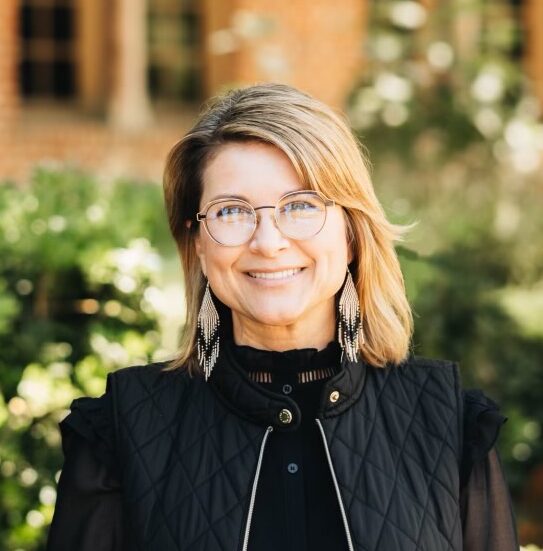
Robin Mitchell Stroud, Ph.D. (she/her) | Director of Student Engagement Programs | USC Office of Religious & Spiritual Life
Robin Mitchell Stroud, Ph.D. (she/her), is a builder of belonging. As Director of Student Engagement Programs in USC’s Office of Religious and Spiritual Life, she works at the intersection of spiritual life, student development, wellbeing, and institutional care, creating programs, communities, resources, and systems that help students of all religious, spiritual, and secular identities feel welcomed and supported at USC.
At the heart of Dr. Mitchell Stroud’s work is a belief that students should not have to separate their inner lives from their university lives in order to belong. She develops experiences that invite curiosity, connection, reflection, spiritual exploration, and meaning-making; mentors student leaders; advises religious, spiritual, and interfaith organizations; and helps students turn their own ideas into communities and programs.
Her particular interests include the diversity of religious, spiritual, and secular life; spiritual development and spiritual practices; contemplative practice; earth-honoring spirituality; Pagan and nature-based traditions; student wellbeing; and the relationship between spirituality, belonging, and human flourishing. Through Mindful USC and ORSL programs, she develops and teaches contemplative and earth-honoring practices that invite greater awareness of self, community, and the living world.
Dr. Mitchell Stroud also provides one-to-one spiritual care and mentoring and is especially interested in creative forms of spiritual care that use nature, reflection, ritual, divination, art, play, animals, conversation, and community as pathways to connection, self-discovery, meaning, and wellbeing. She extends ORSL’s reach through partnerships and programming with USC’s Health Sciences Campus, Athletics, Undergraduate Student Government, academic units, wellbeing initiatives, and other campus partners.
Alongside this relational and programmatic work, Dr. Mitchell Stroud helps build the institutional structures that make religious inclusion possible. As USC’s central point of contact for religious accommodations, she has led efforts to strengthen university resources, processes, and educational materials related to religious observance. Her work includes religious dietary access, housing and residential concerns, holy-day awareness, faculty and staff resources, and collaboration across the university to navigate complex questions of religion, belief, equity, and university life with both care and practicality.
Her institutional leadership also includes service on university committees and initiatives focused on student life, flourishing, social connection and belonging, Jewish and Muslim life, religious accommodations, and wellbeing. She has served as a principal investigator for grant-funded campus inclusion initiatives and contributes to the broader field of religious and spiritual life in higher education through conference presentations, mentoring, interfaith initiatives, and professional collaboration.
Dr. Mitchell Stroud earned her Ph.D. in education from the University of Oklahoma, specializing in educational gender studies and religion and education. Her continuing learning includes study and practice in Druidry and other earth-honoring spiritual traditions.
Whether she is mentoring a student, facilitating a gathering, advocating for religious equity, creating a new program, improving an institutional process, or tending a sacred space, Dr. Mitchell Stroud brings together relational care, imagination, and thoughtful leadership with a common purpose: creating conditions in which people can be known, supported, connected, and more fully themselves.
Dr. Mitchell Stroud loves connecting with students and colleagues across the USC community. Whether you are looking for spiritual community, exploring questions of meaning or belonging, interested in spiritual practices, navigating a religious accommodation, or dreaming up a new program, she would be glad to hear from you.